Power Tools, Robots, and Cordless Devices: Why Battery Packs Need a Second Leak Test
Closing the Quality Gap Between Cell Manufacturing and Pack Assembly with Electrolyte Leak Testing.

A cordless vacuum cleaner that swells until it no longer fits in its charging dock. A power tool battery that loses a third of its runtime within a year. An electric mower that won’t charge anymore. An electronic toy that leaks electrolyte while being used by a child. For manufacturers of power tools, cordless appliances, gardening equipment, and electronic toys, these aren't hypothetical risks: they're the visible symptoms of a problem that started weeks earlier, on the assembly line, with a leak nobody caught in time.
Battery cells used in these products are leak tested before they ever leave the cell manufacturer. Every cell that arrives at a pack assembly line has already passed inspection. So when a leak shows up in a finished product, the natural question is: how did a "good" cell go bad?


The answer is that a cell's leak-tightness isn't fixed forever the moment it passes its first test. After leaving cell production, the cells arrive at the consumer goods manufacturer, they are welded together with busbars and connected to protection circuitry, connectors, and other electronics to form the battery pack, which is then assembled directly into the final product. This assembly step—however carefully controlled—can damage a cell housing that passed its original test with a perfect result.
And the consequences of that damage are not trivial. A cell that leaks electrolyte after it reaches the end-customer is not just a quality nuisance. Even a small, slow leak lets moisture in and electrolyte solvent out, which degrades capacity, accelerates aging, and can lead to swelling, corrosion of nearby electronics, or, in more severe cases, an internal short circuit. For a consumer product, that risk translates into returns, warranty claims, and safety incidents in the field, which is exactly the kind of headline no cordless vacuum, power tool, or toy brand wants to make. Catching a leak on the line, before the pack is built into the finished device, is far cheaper and safer than catching it after a customer does.
A New Risk Introduced After the Cells Have Already Passed
Welding is the most common cause of post-assembly leaks. Laser or resistance welding of busbars generates heat and mechanical stress right at the cell terminals and seams, and pouch cells in particular are vulnerable to micro-damage at these points.


The same risk applies wherever additional electronic connections—protection circuit boards, sensor leads, or wiring harnesses—are integrated into the pack. A cell that was fully intact when it left the cell production line can develop a leak the moment it becomes part of a pack.
Because this damage happens downstream of the original cell test, it is invisible to any inspection performed earlier in the process. Only a dedicated test, after welding and final assembly, can catch it before the pack disappears into its housing, shrink foil, or the final product itself and is shipped to the customer.
Why Standard Methods Fall Short at Pack Level
At the pack level, many lines still rely on visual inspection—manual or camera-based—checking for swelling, discoloration, or visible electrolyte residue. Even automated visual inspection can only flag that a defect exists, based on a change in appearance; it cannot tell whether that defect actually leaks, cannot detect micro-leaks with no visible signature at all, and cannot measure an actual leak rate against a defined reject limit. Pack-level testing also brings its own practical challenges: packs are physically larger than individual cells, and chambers often need to accommodate several packs at once to keep cycle times workable.
The Solution: Electrolyte Leak Testing with ELT Vmax
NFICON's ELT Vmax addresses exactly this gap. Instead of relying on a visual detection or external tracer gas, it detects the electrolyte solvent itself as it evaporates into vacuum—the same principle already used for cell-level testing, now extended to full pack assemblies.

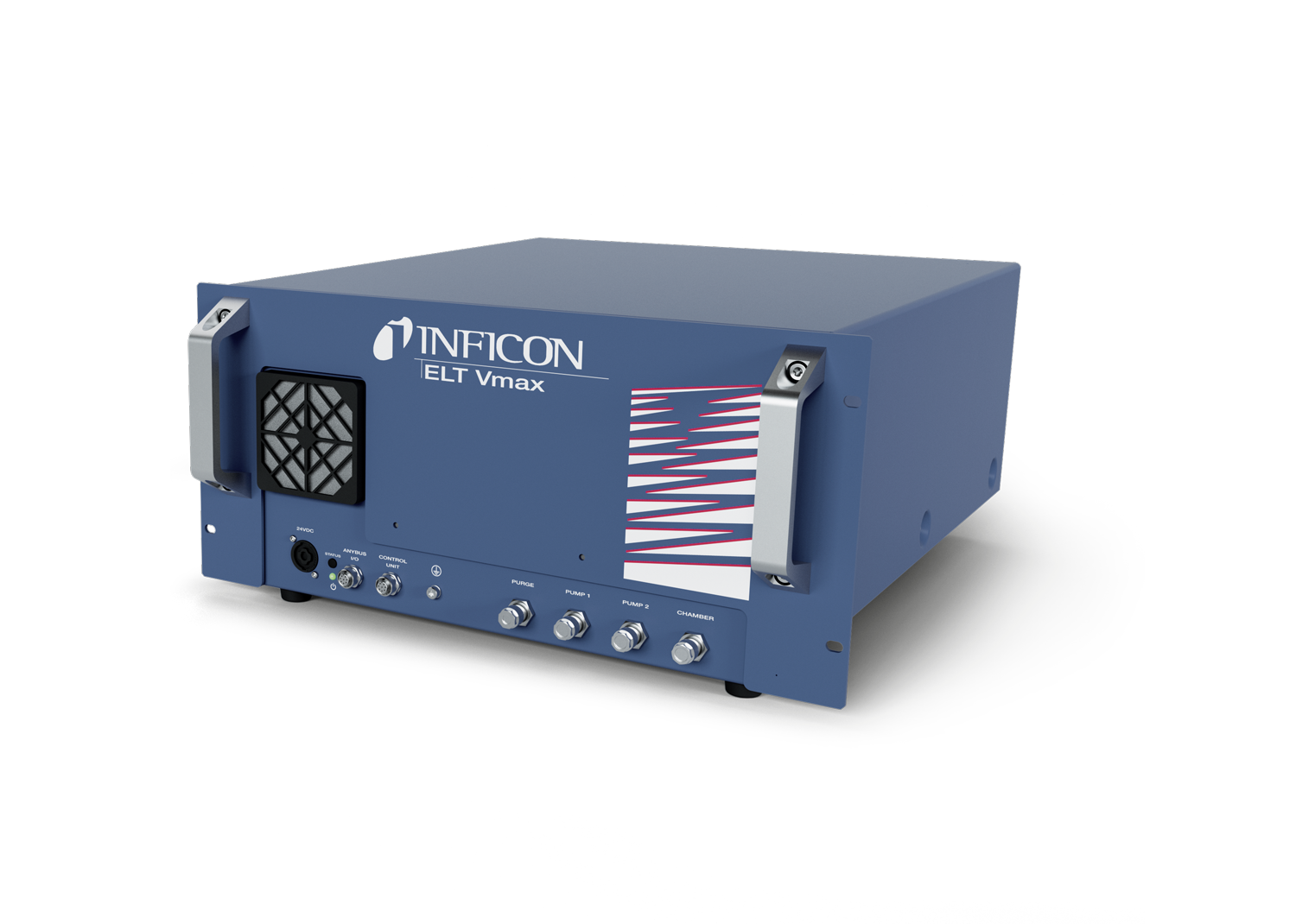
- High sensitivity, even in larger chambers. With a detection limit down to 5 × 10⁻⁸ mbar·l/s, ELT Vmax finds micro-leaks that would otherwise go undetected, even when the test volume is scaled up to accommodate an assembled pack—or several packs—in a single chamber rather than a single cell.
- Short cycle times despite the larger test volume. Optimized signal processing keeps measurement times short, with cycles as fast as 7–8 seconds achievable and up to 30% faster testing than previous-generation systems. Running multiple chambers in parallel keeps throughput high even as the parts being tested get bigger.
- Testing before things get closed up—whatever "closed up" means for that product. In consumer battery pack lines, the electrolyte leak test is typically performed right after welding and wiring but before the pack disappears from view. In a power tool, that means before the shrink foil goes on and the dedicated pack housing snaps shut. In a device like a robot vacuum, there often is no separate pack housing at all—the cells are simply built into the general housing of the finished product. Either way, this is the last practical point at which a leaking cell can still be identified and reworked, rather than discovered later inside a sealed product that was never meant to be opened again.
Finding the Leak, Not Just Confirming It Exists
An ELT Vmax test tells the line that a pack has failed, but not which cell inside it is responsible. That is where INFICON's BES4000 electrolyte sniffer comes in. Used alongside ELT Vmax, it pinpoints the exact leaking cell within a rejected pack by sniffing for electrolyte solvent vapor at the suspect locations, with a response time of under a second. Instead of scrapping an entire pack over one bad cell, technicians can identify and replace the specific cell responsible, and rework rates go down as a result.


A Complete Quality Control Chain
Together, ELT Vmax and BES4000 give consumer goods manufacturers a two-step quality control chain that covers the full journey from incoming cell to finished, assembled product: ELT Vmax confirms whether a pack is tight enough to move on into final assembly, and BES4000 shows exactly where it isn't. For manufacturers of power tools, cordless appliances, micro-mobility products, gardening equipment, and electronic toys, this combination closes the one gap that cell-level testing alone cannot cover: damage introduced during the pack's own assembly.
Want to Learn More?
Contact us to discuss how ELT Vmax and BES4000 can be integrated into your battery pack assembly line.

